
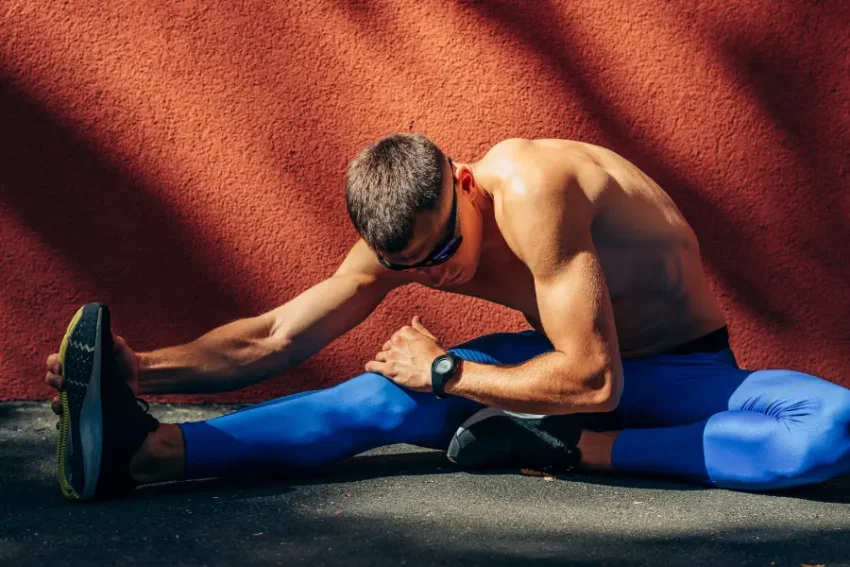
You get up, stretch your arms overhead, try touching your toes and then realize it’s actually incredibly hard to stretch because your body keeps saying, No, for heaven’s sake! Sound familiar? People think that stretching exercises will solve all their problems. The actual problem of tight muscles causes requires more attention than missed stretching sessions. If you experience perpetual limitations which persist after your complete flexibility training, your body requires additional assistance beyond your current routine.
Let’s break this down in a simple, practical way.
1. Stress Is Quietly Locking Your Muscles
Your body responds to stress because it has built-in mechanisms for immediate stress reaction. When you experience overwhelming feelings your body enters a state of emergency response. Your body experiences shoulder elevation and jaw clenching and hip muscles becoming tense. Your body will continue to perceive threats even after you do stretching exercises.
Therefore, stretching the muscle without calming the brain often gives temporary relief only.
Chronic stress is one of the biggest tight muscles causes today. In another simulation, it is suggested that keeping your significant other alert is not at all advisable.
What helps?
- Deep breathing before stretching
- Slow mobility flows instead of aggressive stretches
- Proper sleep
- Lessening caffeine before bedtime
You’ll be able to relax your muscles only after they receive a sense of security from your nervous system.
2. You’re Stretching Cold Muscles
Imagine lifting the frozen rubber band. It snaps. Muscles behave the same way.
Many people stretch without warming up. Consequently, the body resists lengthening. Tightness stays.
Instead, start with light movement:
- 5 minutes of brisk walking
- Gentle squats
- Arm circles
- Hip rotations
Then stretch.
This small shift makes a huge difference. Warm muscles respond better. They lengthen more easily. They recover faster.
Sometimes, tight muscles cause poor preparation.
3. Weakness Can Feel Like Tightness
Here’s something surprising. Muscles may feel tight because they are weak.
For example, if your glutes lack strength, your hamstrings overwork. Over time, they feel stiff. You stretch them daily. Yet the tension returns.
Why? Because the real issue remains.
Therefore, balance stretching with strength training. Add:
- Glute bridges
- Core stability exercises
- Back strengthening moves
This creates support around joints. As a result, the body no longer “protects” itself by tightening up.
Many tight muscles stem from muscle imbalances rather than flexibility limits.
4. Dehydration and Nutrition Matter More Than You Think
Muscles require water and electrolytes together with nutrients to maintain their proper operational condition. The body experiences hydration loss, which leads to decreased tissue elasticity. The body experiences increased stiffness as a result.
In addition, a poor diet slows recovery.Eating processed food without consuming protein leads to muscle recovery problems.
Many readers ask which best diet plan for weight loss while we discuss nutrition. The most effective method for achieving results derives from using a balanced approach. Focus on:
- Lean proteins
- Fresh vegetables
- Healthy fats
- Complex carbohydrates
- Enough water daily
This same structure supports muscle recovery too. The body performs better when all required materials are provided to it.
The body needs hydration and sufficient nutrients because these two factors create tight muscles.
5. You’re Sitting More Than You Realize
Let’s be honest. Most of us sit for hours. Work. Scroll. Watch. Repeat.
Sitting shortens hip flexors. It weakens the glutes. The condition causes a tightening sensation in the chest area. The body requires eight hours of sitting time for its effects to reverse the benefits from your ten minutes of nightly stretching.
The following method should be used:
- You should stand up from your current position after every 45 minutes.
- Walk during phone calls
- Do micro-mobility breaks
Several small stretches prevent stiffness better than an entire long stretch.
The Larger Picture
If your muscles stay tight, your body isn’t broken. It’s communicating.
Maybe stress is high. Perhaps hydration is low. Maybe strength training is missing. Or perhaps daily habits create imbalance.
Rather than stretching harder, stretch smarter. Combine mobility with breathing. Add strength work. Improve nutrition. Move more during the day.
When you address the real tight muscles causes, your body responds differently. You feel lighter. They move easier. You recover faster.
Next time a stretch “doesn’t give” or “doesn’t work,” pause and think: What does my body really have to say about the thing?
Forced Flexibility constitutes the end of permanent flexibility. It all starts with awareness.