
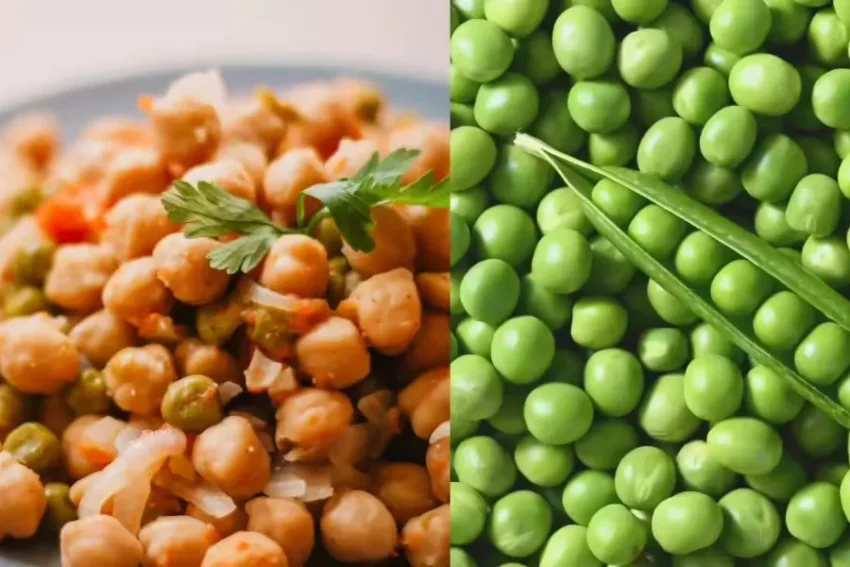
Finding good vegetarian protein sources can be challenging, especially when you want to maintain a balanced diet without relying on meat or protein supplements. Green peas and chickpeas are two popular plant-based foods that offer protein, dietary fibre and essential nutrients. But which one deserves a place on your plate if your main goal is to increase protein intake?
Both have nutritional benefits, but their protein content, calorie levels and overall nutrient profiles are different.
Green Peas vs Chickpeas: Which Has More Protein?
When it comes to protein content, chickpeas have an advantage over green peas.
According to USDA-based nutritional data, 100 grams of cooked chickpeas provide approximately 8.9 grams of protein, while the same quantity of cooked green peas contains around 5.4 grams.
This makes chickpeas a more protein-dense option for people looking to increase their plant-based protein intake.
However, green peas should not be overlooked. They provide a useful amount of protein while containing fewer calories.
Nutritional Comparison: Green Peas vs Chickpeas
Here is a comparison of their approximate nutritional values per 100 grams of cooked food:
- Protein: Chickpeas provide 8.9 g, compared with 5.4 g in green peas.
- Calories: Chickpeas contain approximately 164 kcal, while green peas provide around 84 kcal.
- Fibre: Chickpeas offer approximately 7.6 g, compared with 5.5 g in green peas.
- Carbohydrates: Chickpeas contain approximately 27.4 g, while green peas provide around 15.6 g.
The figures may vary depending on preparation methods and food varieties.
Overall, chickpeas provide more protein and fibre, whereas green peas are a lighter, lower-calorie option.
Health Benefits of Green Peas
Green peas are more than just a colourful addition to meals. They contain several nutrients that support overall health.
1. Support Digestive Health
Green peas contain dietary fibre, which supports regular bowel movements and helps maintain digestive health.
2. Provide Essential Vitamins
They contain vitamins such as vitamin C, vitamin K and folate, which contribute to immune function, normal blood clotting and other important bodily processes.
3. Offer a Lower-Calorie Protein Option
With fewer calories per 100 grams than cooked chickpeas, green peas can be a useful addition to meals when managing overall calorie intake.
Health Benefits of Chickpeas
Chickpeas, also known as garbanzo beans, are widely used in vegetarian diets because of their protein, fibre and mineral content.
1. Help Increase Protein Intake
Their higher protein content makes chickpeas a useful choice for vegetarians looking to support muscle maintenance and repair.
2. Promote Fullness
The combination of protein and dietary fibre can help you feel fuller for longer, making chickpeas a satisfying addition to meals.
3. Provide Important Minerals
Chickpeas contain nutrients such as iron, magnesium, phosphorus and folate, which support several essential bodily functions.
Which Should You Choose for a Vegetarian Diet?
The better option depends on your nutritional goals.
If increasing protein intake is your priority, chickpeas are the stronger choice. They provide more protein and fibre per 100 grams than cooked green peas.
If you want a lower-calorie vegetable that still contributes protein and essential vitamins, green peas are an excellent option.
You do not necessarily need to choose one over the other. Including both in your diet can help improve nutritional variety. Add chickpeas to salads, curries and hummus, while using green peas in soups, pulao and vegetable dishes.
Green peas and chickpeas are both valuable vegetarian protein sources, but chickpeas offer more protein per serving. Green peas, on the other hand, provide fewer calories and a different combination of vitamins and nutrients.
Rather than treating them as competing foods, consider including both in a balanced diet. A varied combination of pulses, legumes, dairy products, soy foods, nuts and seeds can help vegetarians meet their daily protein requirements.