
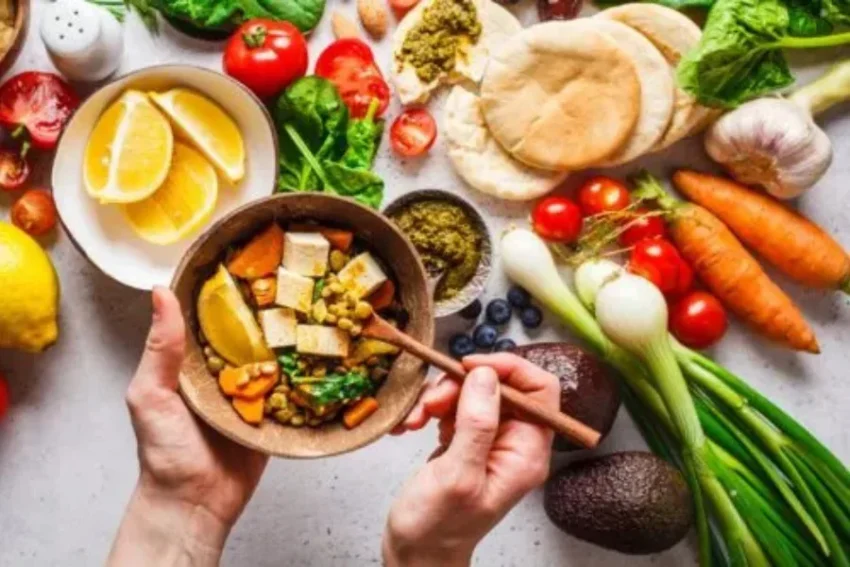
Have you ever looked at your weekly meals and thought you are repeating the same few vegetables, fruits and grains. and then you shrug it off because “it seems fine”… or because it’s easier that way? That is where the 30 plants a week challenge gets interesting. The idea is simple, sort of: rather than only watching calories or cutting foods out, you try adding more variety into your meals. Some research ties higher plant variety to a more diverse gut microbiome. Still experts say 30 is a handy target, not a magic number, or anything.
Why plant varieties matter
Your gut is basically home to trillions of microorganisms. They tangle and cooperate with the foods you eat, especially all that fiber and the plant compounds hiding in whole foods. So when you eat different kinds of plants, your gut bacteria get more options for what to munch, and how to function.
That’s where plant diversity comes in, like apples, oats, lentils, spinach, almonds, chia seeds, tomatoes, herbs and spices all bring something a little different to your plate. It sort of works as a compliment for the entire meal, you know, the whole mix. Not the same role, not the same “profile”, you know?
It’s interesting, the American Gut Project found that people who ate more than 30 different plant foods each week seemed to show higher microbiome diversity compared with people who ate fewer than 10. Still, it was observational work, so it can’t really prove that hitting 30 plants is what directly creates better health.
So instead of chasing one ideal number, try thinking of it as a gentle nudge to keep your meals more colorful and varied, like it’s a small practice you build over time.
How does this 30 plants a week thing work?
The best part is, you don’t really need 30 separate salads or anything like that.
Basically you can mix and match all sorts of plant foods, different fruits, vegetables, legumes, whole grains, nuts, seeds, herbs and spices. That way, variety just sort of appears by itself, you know. Like, in the morning your oats can get blueberries, chia seeds, walnuts, and a pinch of cinnamon. Then at lunch, you could be adding spinach tomatoes, chickpeas and brown rice, no big deal really. Sometimes it’s more like a quick mix and go thing .
So suddenly, the same day can hold several different kinds of plants without feeling complicated or forced.
After that, just keep stacking choices as the week goes on. One day you swap white rice for quinoa. Another day you add lentils instead of your usual beans, and then, for a snack, pick a different fruit than the one you had yesterday.
The whole point isn’t giant portions. It’s more about increasing the number of distinct plant foods you actually like and reach for.
How to boost gut health in a natural way
Ever wonder how to improve gut health, without turning your diet into some pressure marathon? Just start a little. Like really small.
To begin with, add fiber in steps. Beans, oats, vegetables, fruits, nuts and seeds are all fairly easy options. After that, make sure you’re drinking enough water, because fiber usually works best when your body is well hydrated and not dry in the background.
Also, don’t make every meal feel the same, you know? Like, if Monday’s breakfast is oats and banana, then on Tuesday switch it up a bit… maybe go with yogurt, with berries and seeds instead. Variety is a simple strategy.
So, if fermented foods work for you, maybe add them, like little by little or gradually, and yeah, see how you feel. Yogurt, kefir, kimchi, and other cultured foods can fit nicely alongside a varied eating pattern.
Most importantly, listen to your body. If you raise fiber quickly and get bloating, then slow down, and bring in new foods more gradually, not all at once.
Make Variety Your New Food Goal
Picture opening your fridge right at the start of the week. Don’t just think about “What should I remove from my diet?”, try asking “What can I add?”
That little change can make eating well feel way less like a chore, more like something you’re actually picking for yourself.
Keep a very small plant list on your phone. Each time you eat a new fruit, vegetable, grain, bean, nut, seed, herb, or spice, add it. By Friday, you may be a little amazed at what you’ve managed to collect so far.
The “30 plants a week” idea isn’t about perfection, nope. It’s more about stepping away from the same meals over and over, and moving toward real variety. And sure, the exact number should not become a stress button. Still, chowing on a wider range of whole plant foods can be sort of useful to support gut health, and keep your diet more balanced in practice. And it can also make things more steady overall, not just in one lane or another.
So, would you test the 30 plants a week challenge? Begin with five new plants this week, then let your plate guide the rest.